
Best Subscription Models for Indian Health & Wellness Brands on Shopify
 subscriptions
Health and wellness is one of the few D2C categories where subscriptions aren’t a nice-to-have — they’re the whole point. Supplements, protein, greens, Ayurvedic formulations, and functional foods are all things people are supposed to take every day, on a schedule, for the effect to compound. That’s the definition of a subscription product. The problem most Indian wellness brands run into isn’t whether to sell subscriptions — it’s which model to run, how to match it to the way customers actually consume and pay, and how to do it without handing a chunk of every recurring order to transaction fees.
This guide walks through the four models that work for Indian health and wellness D2C, when each one fits, what to watch out for, and the India-specific factors — payment behaviour, COD, replenishment cycles — that decide whether a subscription program compounds or quietly leaks.
Quick answer
The four subscription models most useful to Indian health and wellness brands are:
- Recurring delivery — the same product ships on a repeating cadence (every 30, 45, or 60 days) for a modest discount. Best for a single hero product people reorder like clockwork.
- Prepaid plans — the customer pays once for a fixed course (three, six, or twelve months) and you ship on schedule against it. Best for protocol-based products such as Ayurvedic and supplement courses.
- Curated boxes — you choose a rotating selection each cycle around a theme. Best for discovery and multi-SKU ranges.
- Build-your-own kits — the customer assembles their own recurring kit from your range. Best for brands whose customers have individual routines.
The fundamental difference is who decides what ships and when. Recurring delivery and prepaid keep it simple and predictable; curated hands the merchant editorial control; build-your-own hands the customer control. The right choice follows your catalogue and how customers actually consume the product — not which model sounds most sophisticated.
Why the model matters more than the discount
Most brands treat “subscription” as a single toggle: switch on subscribe-and-save, offer 10% off, done. But the shape of the plan — how you bill, what ships, and how much control the customer has — decides retention far more than the discount does. A 10% discount doesn’t keep anyone subscribed past month three; a plan that fits how they actually consume the product does.
That’s especially true in India, where margins on nutraceuticals are thin, COD and prepaid behave very differently, and customers cancel quickly if a delivery shows up while they still have stock. The right model protects margin and keeps people subscribed. Here are the four worth considering.
The four models at a glance
| Subscription model | Best for | Customer commitment | Retention potential | Operational complexity | Main risk |
|---|---|---|---|---|---|
| Recurring delivery | A single hero product people reorder | Low — decided each cycle | Solid when skip and pause are effortless | Low | Cadence mismatch leads to over-shipping and cancellations |
| Prepaid plan | Protocol-based courses with a defined duration | High — paid upfront | Strong — removes the monthly cancel decision | Low–medium | The upfront price wall; refund handling |
| Curated box | Discovery across a multi-SKU range | Medium — decided each cycle | Depends on keeping the contents feeling fresh | Medium | Repetition fatigue |
| Build-your-own kit | Ranges whose customers have individual routines | Medium — decided each cycle | Can be strong when the kit mirrors a real routine | High | Combinatorial load on forecasting and packing |
Read the table as a starting point for a decision, not a ranking. No column has a universal winner — a curated box with genuinely fresh rotation can out-retain a poorly-cadenced recurring plan, and a prepaid course only pays off if customers trust you enough to commit upfront.
1. Recurring delivery (“subscribe & save”)
What it is
The default model. A customer buys a product on a recurring cadence — every 30, 45, or 60 days — usually for a modest discount, and is billed automatically each cycle.
Best for
Single-hero-product brands. If your business is one whey protein, one daily multivitamin, or one hair-growth serum that people reorder predictably, recurring delivery is the cleanest fit. It’s the easiest to set up, the easiest for customers to understand, and the easiest to forecast. It’s the natural model for protein and supplement brands built around a small number of SKUs.
Why it works
It mirrors a behaviour the customer already has — reordering the same thing — and removes the small friction of doing it manually each month. The discount is a nudge, not the reason people stay; convenience and habit are.
Advantages
- Lowest operational overhead of any model — one product, one schedule.
- Predictable inventory and cash flow once a subscriber base builds.
- Easy for customers to reason about, which lifts opt-in at checkout.
Watch-outs
Cadence mismatch. A 1kg protein tub lasts different customers very different amounts of time. Bill everyone on the same 30-day cycle and you’ll ship product to people who haven’t finished the last bag — and overstocked customers cancel. The single biggest retention lever here isn’t the discount, it’s letting people skip, pause, and reschedule freely. We’ve written about why the skip button is your best retention tool — making cancel-adjacent actions easy feels counterintuitive, but it consistently keeps subscribers who would otherwise have left.
Example
A brand selling a single daily greens powder in a 30-serving pack maps almost one-to-one to a monthly cadence — one pack, one month, one charge. The moment that same brand adds a 60-serving value pack, a fixed monthly cycle starts over-shipping the value-pack buyers, and adjustable frequency stops being optional.
2. Prepaid plans (3, 6, or 12 months upfront)
What it is
Instead of billing every cycle, the customer pays once for a fixed course — three months of a supplement, a six-month Ayurvedic protocol — and you ship on schedule against that prepayment. See the prepaid subscription definition for how it differs from pay-as-you-go recurring billing.
Best for
Wellness products with a protocol built in. Ayurvedic and nutraceutical brands have a natural advantage here: the product genuinely works best over a defined course, so a prepaid plan aligns billing with the outcome the customer wants.
Why it works
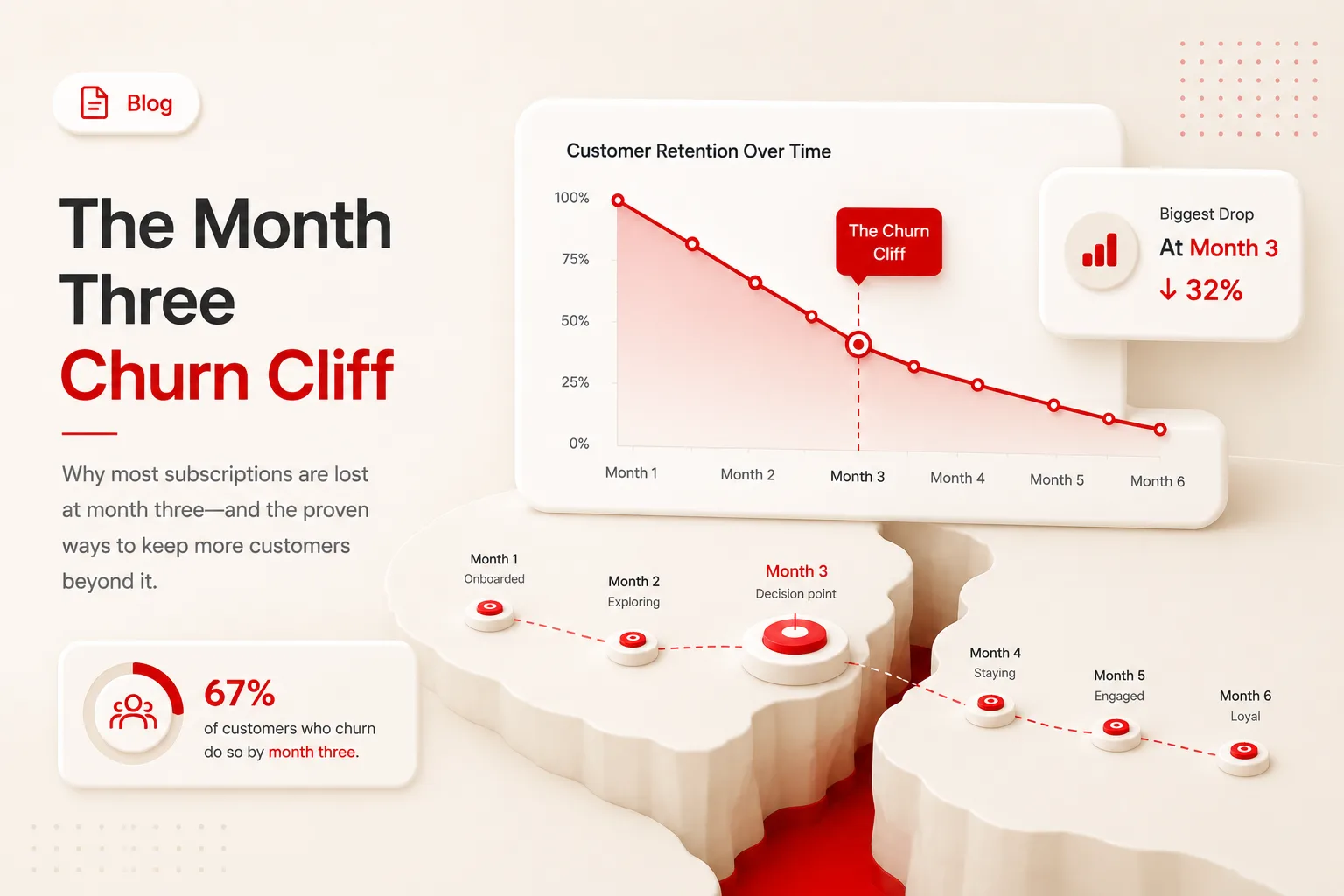
It front-loads cash flow and, crucially, eliminates the month-to-month cancel decision — the customer isn’t re-deciding every 30 days. Because most subscription churn clusters in the first few cycles, committing the customer to a course upfront tends to carry them through the window where they’d otherwise drop off — the month-three churn cliff.
Advantages
- Strong upfront cash flow, useful for funding inventory and acquisition.
- Removes recurring cancel decisions, which supports retention through the early cycles structurally rather than through discounts.
- Aligns naturally with products sold as a course or programme.
Watch-outs
The upfront price wall, and refunds. A prepaid plan asks for a bigger commitment, so it converts best once you’ve earned trust — returning customers, or buyers who start with a single one-time purchase. Pair it with a clear refund policy so the ask feels safe. Prepaid can post strong lifetime value precisely because it locks in the high-churn early window, but only when the customer believes the course will deliver.
Example
A brand selling a 90-day Ayurvedic hair or gut-health protocol can offer the full course as a single prepaid plan with three monthly shipments. The customer buys the result — a completed course — rather than re-authorising a charge each month.
3. Curated wellness boxes
What it is
You choose what ships each cycle — a rotating selection of products around a theme (a monthly wellness box, a seasonal immunity set, a sampler of your range). See the curated box definition for how it contrasts with letting customers choose.
Best for
Discovery and range brands. If you sell many SKUs and want customers trying more of your catalogue, a curated box does that while giving you control over what goes out — which makes inventory and forecasting far simpler than letting customers pick. It’s also a strong acquisition product: “one box, a curated experience” is an easy first yes.
Why it works
It sells novelty and discovery rather than replenishment, so it attracts customers who want variety and a sense of being looked after. Merchant control over contents also lets you steer slow-moving inventory and introduce new SKUs.
Advantages
- Doubles as a low-friction acquisition and discovery product.
- Merchant control makes inventory and forecasting simpler than customer-choice models.
- A natural home for storytelling, seasonality, and range expansion.
Watch-outs
Repetition fatigue. Curated only works if what’s inside keeps feeling fresh; the moment it feels like the same box every month, people cancel. Rotation planning is genuinely the hard part — the same problem coffee subscriptions hit, which we cover in variety rotation is the hardest part of a coffee subscription. If you’re weighing curated against letting customers choose, the trade-offs are laid out in our guide on build-your-own vs curated boxes.
Example
A skincare brand can run a seasonal box — a lighter routine for summer, a richer one for winter — that both showcases the range and gives customers a reason to stay subscribed across the year.
4. Build-your-own supplement kits
What it is
The customer assembles their own recurring kit — pick the protein, add a multivitamin, throw in a greens powder — and it ships together on one schedule. See the build-your-own box mechanics for how per-item limits and a billing cutoff keep it manageable.
Best for
Brands with a real range and customers with individual routines. Because the plan reflects a stack the customer chose themselves, it tends to fit their actual habits closely — and it lifts average order value, since people add “one more thing” to a kit far more readily than they’d start a second subscription.
Why it works
Personalisation reflects the customer’s established routine, so the plan feels like theirs rather than a generic offer. Cancelling means giving up a specific combination they assembled — a higher perceived switching cost than a single-product plan.
Advantages
- Can support strong retention when the kit mirrors a routine the customer already follows.
- Higher average order value through easy add-ons.
- Deepens the relationship — the brand becomes the customer’s whole routine, not one product in it.
Watch-outs
Operational complexity. More combinations mean more to forecast, pack, and get right. This model only works if your subscription tooling can handle a proper build-your-own kit and give customers a self-service portal to adjust it — swap items, change quantities, skip a cycle — without emailing support.
Example
A multi-product wellness brand lets a customer build a recurring kit of whey + creatine + a multivitamin on one 30-day schedule, then swap creatine for a greens powder next cycle from the portal — all as a single subscription and a single delivery.
What Indian wellness brands should weigh before launching subscriptions
The four models are universal; the constraints around them are not. These are the India-specific factors that most often decide whether a subscription program holds.
Payment behaviour: mandates and failed charges
Recurring payments in India run on mandate frameworks, not on a stored card that simply gets charged. Card and UPI subscriptions use e-mandates and UPI AutoPay, which add authentication steps at setup and impose per-mandate limits. The practical effect is two-fold: setting up a recurring mandate carries more friction than a one-time payment, and mandates fail more often than merchants expect — expired cards, revoked mandates, insufficient balance.
The design implication is that failed-payment recovery isn’t optional in India; it’s core infrastructure. A subscriber whose mandate silently fails looks identical to a cancellation on your dashboard, but the two need completely different responses. Automatic retries and dunning turn a large share of those “cancellations” back into recovered revenue.
COD changes the economics
A meaningful share of Indian D2C demand still prefers cash on delivery, and COD and subscriptions sit in tension: there’s no stored mandate to charge, every cycle is a fresh delivery-and-collect, and RTO (return-to-origin) risk lands on each shipment rather than being amortised across a paid-up course. For subscriptions specifically, prepaid plans are the cleaner path — the customer pays once, upfront, and the RTO exposure of per-cycle COD disappears. Where COD is unavoidable, treat it as a higher-cost channel and reflect that in how you price and cadence the plan.
Match frequency to consumption, not the calendar
The most common self-inflicted churn in wellness subscriptions comes from billing on a round monthly cycle that doesn’t match how fast the product is actually used. Consumption varies by product and by customer:
- Supplements and vitamins are often dosed daily, so a pack size maps fairly cleanly to a number of days.
- Protein depends on training frequency and serving size — the same tub can last one customer a month and another two.
- Skincare and Ayurveda vary with routine and application; a serum and a face wash from the same brand rarely run out together.
Rather than guessing exact consumption periods, let the cadence self-correct: give customers adjustable frequency and effortless skip/pause, and the plan settles toward their real usage instead of fighting it.
Logistics and delivery economics
Shipping frequency, geography, and packaging all compound on a recurring order in a way they don’t on a one-off. Frequent low-value shipments carry disproportionate delivery and packaging cost; wider delivery geographies raise both cost and RTO risk. Two moves help: nudging customers toward slightly longer cadences or larger pack sizes so each shipment carries more value, and using prepaid or build-your-own kits to consolidate what would otherwise be several separate deliveries into one.
Trust rises with commitment
The more you ask a customer to commit — a longer cadence, a prepaid course, a bigger kit — the more perceived value and trust the offer has to carry. Low-commitment recurring delivery can convert on convenience alone; a six-month prepaid plan cannot. This is why sequencing matters: earn trust with a low-commitment first purchase, then offer the higher-commitment plan once the customer has seen the product deliver.
Which subscription model should your brand choose?
You don’t have to choose just one — but you can reason your way to a starting point.
- Choose recurring delivery when the customer repeatedly buys the same product and the main job is to remove the friction of reordering.
- Choose a prepaid plan when the product has a defined protocol or a predictable multi-month usage cycle, and the outcome is a completed course.
- Choose a curated box when discovery and variety are central to the experience and you want merchant control over what ships.
- Choose build-your-own when customers have different needs and want control over the assortment in their recurring kit.
If your brand sells…
- One hero product → recurring delivery is usually the cleanest fit.
- Protocol-based wellness products → a prepaid course is often worth offering.
- Multiple complementary products → a curated box can be a strong acquisition and discovery product.
- Highly personalised routines → build-your-own typically fits best.
The strongest Indian wellness brands often run two models in combination: recurring delivery on the hero product for the mass of customers who just want their monthly protein or multivitamin, with a prepaid plan offered at checkout for the committed ones — capturing both the low-friction and high-LTV ends. Or a curated box as an acquisition product, nudging those customers toward a build-your-own kit of the items they actually kept using. The pattern is consistent: use the low-commitment model to acquire, and the high-commitment model to retain and grow.
Which subscription model is best for a protein brand?
For a brand built around one or two hero proteins, recurring delivery is usually the right call, because customers reorder the same product on a predictable rhythm. The decisive detail is cadence, not the model: a tub lasts different customers different amounts of time depending on training frequency and serving size, so let subscribers set their own frequency and skip freely rather than forcing a single 30-day cycle. Brands with a wider range — protein plus creatine, greens, or vitamins — can add a build-your-own kit for customers who stack several products and want them on one schedule and one delivery.
Are prepaid subscriptions a good fit for Ayurvedic products?
Often, yes — Ayurveda is one of the categories where prepaid plans make the most sense. Many formulations are designed to work over a defined course of several weeks or months, so a prepaid plan aligns the billing with the result the customer is actually buying, and removes the monthly decision to continue during the exact window when doubts and churn peak. The two requirements are honesty about the course length and a refund policy that makes the upfront commitment feel safe. For customers not yet ready to commit, offer a single one-time purchase first and present the prepaid course once they’ve seen early results.
Curated box or build-your-own — which is better?
They solve different problems, so “better” depends on the job. A curated box is a discovery engine: the merchant chooses the contents, which keeps operations simple and makes it a strong acquisition product, but retention depends entirely on keeping the rotation fresh. Build-your-own is a retention engine: the customer assembles their own kit, which fits their routine closely and raises switching cost, at the price of real operational complexity. A common sequence is to acquire with a curated box and, once you understand what a customer keeps using, invite them to build their own kit of exactly those items. Our guide on build-your-own vs curated boxes works through the trade-offs in more depth.
How should a Shopify wellness brand choose a subscription model?
Start from how customers consume the product, not from the app’s feature list. Map your catalogue — one hero SKU, a protocol, a wide range, or a personalised stack — to the four models above, then check three practical constraints: whether your subscription tooling supports the model you actually need (many apps do recurring delivery well but handle prepaid or build-your-own poorly), whether the customer portal lets people self-serve skips and swaps, and how the app prices. On Shopify, subscriptions run on selling plans and Subscription Contracts through native checkout; the official Shopify documentation covers the foundation, and subscription apps build the models on top of it. The differentiator between apps is which models they support under one plan, how flexible the portal is, and whether they take a cut of every recurring order.
The margin problem nobody mentions
Here’s the part that decides whether any of this is worth it in India: transaction fees. Many Shopify subscription apps take a percentage of every recurring order — often around 1% plus their monthly fee, sometimes more. On a category with margins as thin as nutraceuticals, a per-order cut compounds badly: the more successful your subscription program gets, the more it costs you, forever.
Run the numbers on a wellness brand doing ₹15–20L/month in recurring revenue and a 1% fee is a full-time salary handed to your app vendor for doing nothing extra. We broke down how this adds up in how much subscription apps really cost, and there’s a dedicated guide on avoiding Shopify subscription transaction fees.
For a wellness brand operating on tight margins, the ideal setup is:
- Native Shopify checkout — subscriptions billed through Shopify’s own payments, no separate payment flow, so COD/prepaid and your existing gateways just work.
- Every model above under one plan — recurring, prepaid, curated, and build-your-own — instead of stitching together apps.
- Automatic failed-payment recovery, so subscribers don’t silently lapse when a card or UPI mandate fails — recovery is pure retained revenue.
- Flat pricing with zero transaction fees, so growing your subscriber base doesn’t grow your bill.
How Curobi supports these subscription models
Curobi is a Shopify subscription app that runs all four models on native Shopify billing under one flat plan. For clarity on what that covers:
- Recurring delivery with flexible frequencies and adjustable cadence.
- Prepaid subscription terms for fixed-length courses.
- Merchant-curated boxes and build-your-own kits with per-item limits and a billing cutoff.
- A self-service customer portal where subscribers skip, pause, swap products, change quantities, and cancel without contacting support.
- Automatic failed-payment recovery and dunning, which matters more in India than most markets given how often mandates fail.
- Subscription analytics — active subscribers, MRR, charges, and churn — and flat monthly pricing that takes no cut of any recurring order.
None of this replaces the strategic work of choosing the right model for your catalogue — that decision stands on its own, whichever app you run. The point of the list is only that if you’ve settled on a model, the tooling shouldn’t be the thing that stops you shipping it, or the thing that taxes it as you grow.
The takeaway
For an Indian health and wellness brand, the question was never whether to run subscriptions — your product is built for them. It’s picking the right shape: recurring delivery for your hero SKU, prepaid plans for committed customers, curated boxes to acquire, and build-your-own kits to retain. Match the cadence to real consumption, make skipping and pausing effortless, plan for mandate failures, and — most important on Indian margins — don’t let per-order fees eat the whole thing. Get that right and you turn a daily health habit into predictable, compounding revenue.
If you’re deciding how to structure it, our guide on reducing subscription churn covers the retention side in depth, and the customer portal is where most of that retention is won or lost.
Frequently asked questions
What is the best subscription model for an Indian wellness brand?
There is no single best model — the right one depends on your catalogue and how customers consume the product. Recurring delivery suits a single hero product people reorder; prepaid plans suit protocol-based products like Ayurvedic courses; curated boxes suit discovery across a wide range; and build-your-own suits customers with individual routines. Many strong brands combine a low-commitment model to acquire with a higher-commitment one to retain.
What is a prepaid subscription?
A prepaid subscription is one where the customer pays once, upfront, for a fixed course — for example three or six months of a supplement — and receives scheduled shipments against that single payment. It front-loads cash flow and removes the month-to-month cancel decision, which is why it tends to hold customers through the window where most churn happens.
Are subscriptions suitable for Ayurvedic products?
Yes, and often better than for many other categories. Ayurvedic and nutraceutical formulations typically work over a defined course, so a prepaid plan aligns the billing with the outcome the customer wants. The main requirements are clear expectations about the course length and a refund policy that makes the upfront commitment feel safe.
How often should wellness products be delivered?
Delivery frequency should follow real consumption, not a default monthly cycle. A daily-dose supplement in a 30-count pack maps to roughly a month; a protein tub or a skincare serum can last a very different length of time per customer. Shipping on a fixed cadence that ignores this leaves customers overstocked, and overstocked customers cancel. Let people skip, pause, and reschedule so the cadence self-corrects.
Are prepaid subscriptions better than monthly subscriptions?
Neither is universally better. Prepaid plans generate stronger upfront cash flow and remove the recurring cancel decision, but they ask for more trust, so they convert best with returning customers or products that have a defined course. Monthly recurring delivery is lower-friction and easier to start, which makes it the better acquisition model. Offering both — monthly to acquire, prepaid to deepen — is a common approach.
Can Shopify support different subscription models?
Yes. Shopify supports subscriptions through selling plans and Subscription Contracts on native checkout, and subscription apps build recurring delivery, prepaid terms, curated boxes, and build-your-own kits on top of that foundation. The differences between apps come down to which models they support under one plan, how flexible the customer portal is, and how they price.
How can wellness brands reduce subscription churn?
The biggest levers are matching delivery frequency to actual consumption, making skip and pause effortless so customers stay instead of cancelling, and recovering failed payments automatically so subscribers don’t lapse silently when a card or UPI mandate fails. Prepaid and build-your-own models also help structurally, because they either remove the monthly cancel decision or tie the plan to a routine the customer chose.