
Variety rotation is the hardest part of a coffee subscription
 coffee
For a lot of specialty subscribers, variety is the product. They’re not subscribing to re-order the same bag — they signed up to be surprised, to taste the new harvest, to let the roaster pick something they’d never have chosen. “Roaster’s Choice” and seasonal rotation are the reason they stay. They’re also the part the tooling handles worst, because generic subscription apps are built for consistent SKUs on a fixed schedule, and rotation is neither.
The rotation mistake that eats your week
There are two ways to run a rotating coffee program, and picking the wrong one quietly costs you hours every cycle.
- Customer rotation — the coffee schedule starts at each customer’s first order. Subscriber A is on their month-three coffee while Subscriber B, who joined last week, is on month one. It sounds personal, but it becomes a confusing time-sink that’s genuinely hard to scale — you’re tracking a different position in the rotation for every single subscriber.
- Roastery-set rotation — everyone on the plan gets this cycle’s coffee, and the whole cohort advances together. Far simpler to run, forecast, and roast for, because there’s one answer to “what’s shipping this month” instead of hundreds.
Roastery-set rotation is almost always the right default for a curated club. Yet few apps model it cleanly — they assume a per-customer schedule — so roasters end up hacking it with spreadsheets. If you’re weighing curated against a customer-assembled plan, our guide on build-your-own vs curated subscription boxes walks through which fits which category.
Finite micro-lots break the “consistent SKU” assumption
Here’s the tension no billing-first app was designed for: single-origin micro-lots and seasonal harvests are genuinely limited. Once a Gesha lot sells out, it’s gone until next harvest — there’s no reorder, no restock, no back-order. But subscription apps built around always-available catalog products assume the SKU you billed for will still exist next cycle. When it doesn’t, you get failed fulfilment, awkward substitutions, or a scramble.
Modelling this properly means designing the program around scarcity instead of fighting it:
- Lead with roastery-set rotation so you’re committing one lot to the whole cohort at once — you can size the buy to the subscriber count instead of guessing per person.
- Use a billing cutoff — the point before the recurring charge is created where the box is locked — so you know exactly how many bags of a finite lot are going out before you commit it, rather than overselling a lot you can’t refill.
- Keep a house blend as the fallback for when a micro-lot runs out mid-cycle, so a sold-out Gesha becomes a graceful swap, not a broken order.
Don’t drown customers in frequency choices
The other self-inflicted wound is over-configuring the plan. One of the most common pitfalls roasters hit is offering too many subscription frequency choices — weekly, 10-day, biweekly, three-week, monthly, six-week. Every extra option is another rotation timeline to track and another decision that stalls a would-be subscriber at the signup screen. Pick two or three cadences that map to how fast people actually drink and stop there. Simplicity on the front end is also simplicity in your roasting schedule.
How this maps to Curobi
Curobi treats these as native formats rather than workarounds. Curated boxes rotate on a schedule you set for the whole plan, and build-your-own boxes let regulars assemble their own bags from an eligible set. Both enforce a per-item limit and a billing cutoff, so each box is locked before the recurring charge runs — which is exactly what you need to commit a finite lot with confidence. It’s all built for roasters specifically; see Curobi for coffee and our full playbook on how coffee roasters run a subscription on Shopify.
The takeaway
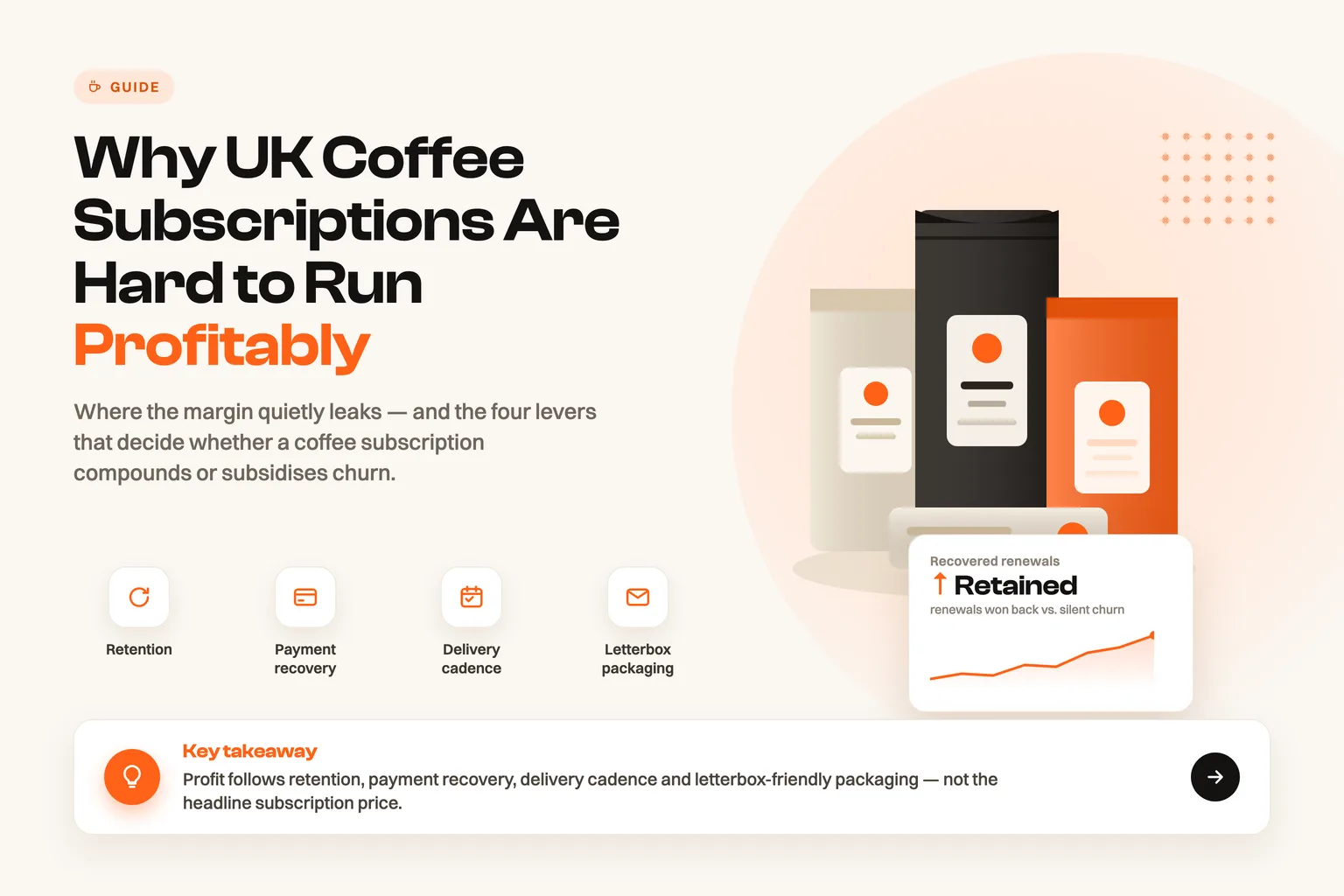
Rotation and scarcity are the coffee-native problems generic apps were never built for — and they’re where the churn hides, because variety is the reason people subscribed in the first place. They’re also, quietly, a margin problem: rotation and scarcity sit alongside the wider set of costs that erode coffee subscription margin. Run roastery-set rotation instead of per-customer schedules, lock each box before billing so you can commit finite lots without overselling, keep a blend as a fallback, and resist the urge to offer ten cadences. Get rotation right and the surprise-and-delight that sold the subscription keeps it alive.